MFA for Alternative Provision: Closing the School Cyber-Gap

MFA for Alternative Provision: Closing the School Cyber-Gap
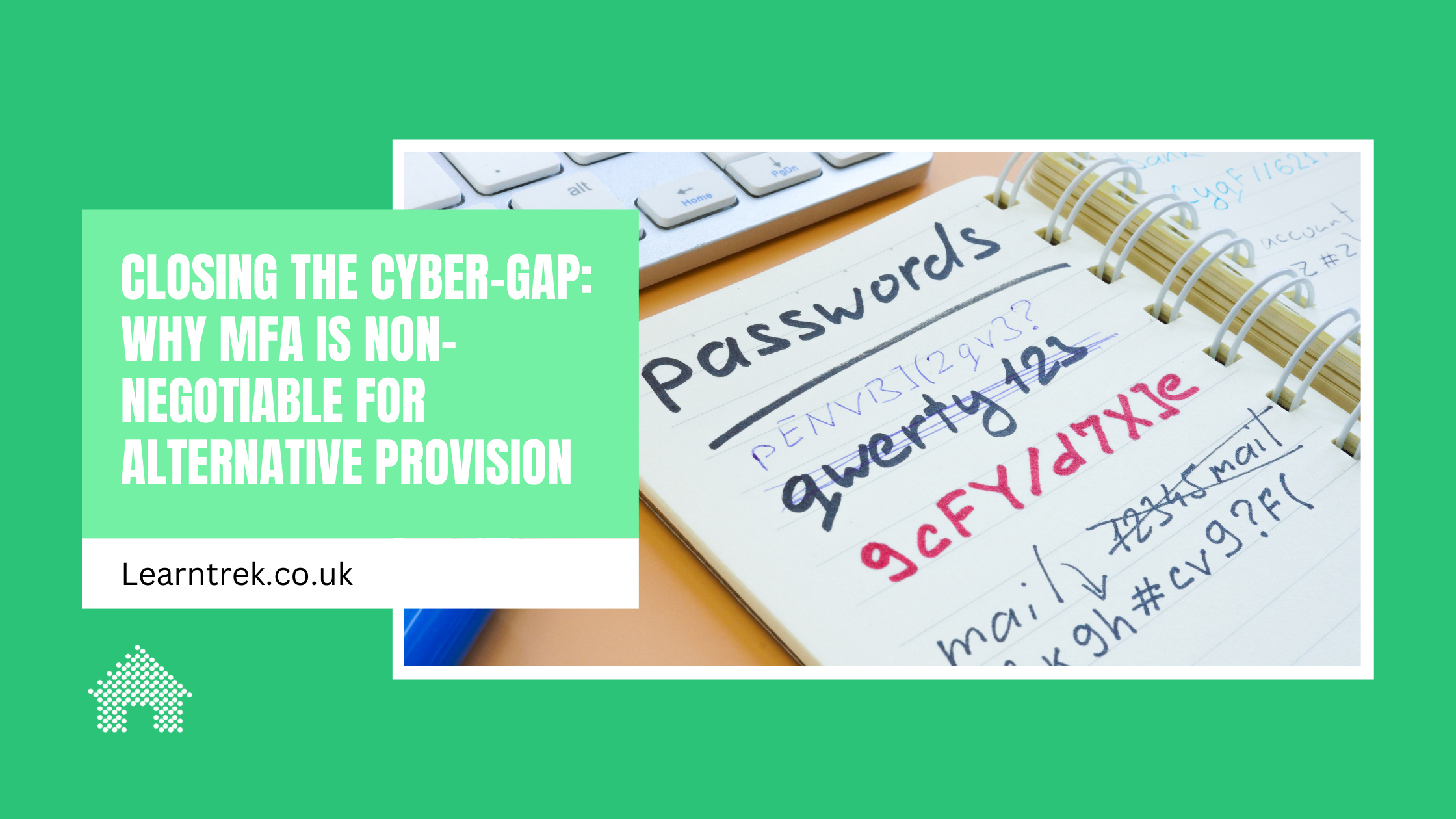
The Nation Cyber Security Centre warned us that MFA-targeted attacks were coming. The 2025 data proves they are here.

The Funding Gap in School Security

All parts of the education sector investigated by NCSC were found to have a higher percentage of cyber attacks than the 43% level experienced by  businesses across all sectors. Although Primary Schools and Secondary Schools were the lowest of the education sector, they nevertheless reported 44% Primary and 60% Secondary attacks or breaches in the last year (as of mid 2025). The most common form of cyberattacks was phishing, impersonation and viruses/spyware/malware. All forms of these attacks cause risk of interfering with children’s education and Alternative Provision support.

External sources of support can help to lessen the  number of breaches. Multi-Factor Authentication (MFA), for example, is an extra layer of security for educational institutions to keep their information safe. The National Standards for Non School Alternative Provision will mark a change for alternative provisions and how they are expected to work. Section 3 of the standards focuses on admissions, support and guidance, requiring private information to be well protected in line with GDPR.

While larger schools and academies have the safety net of larger trust-wide budgets, expertise as well as access to government funded schemes and support; Alternative Provisions often operate on the front lines with fewer resources. This creates a ‘security gap’ that cyberattackers  are eager to exploit. At Learntrek, we don’t believe your students’ data should  be less secure just because your setting is smaller. We’ve designed our platform to bridge that gap – giving you the same ‘lock-and-key’ protection used by major institutions, but tailored specifically for the unique workflow of an AP.

What is MFA?

A verification method of multiple security methods and options. Passwords, passwordless MFA and a code provided by an app or biometric authenticator being the most common.

We Can Help

At Learntrek we  offer MFA free of charge in our software as we don’t believe security should be an add-on. Data is securely hosted by Amazon Web Services, and we provide a range of cyber security measures including cyber security scanning alongside MFA. Registered with the UK Government’s Cyber Essentials programme, we make it as clear as possible that we value security of the students and staff first. Our databases allow a restricted line of access to specific individuals, and cybersecurity is a core part of Learntrek handling sensitive information.

Empowering Your Team

It can be overwhelming to keep up with the constant security updates required to battle modern cyberattacks. That is why we don’t just provide the software; we provide the knowledge. We offer comprehensive staff training (via support videos, training calls, or face-to-face sessions) to help your team understand and navigate your security system with confidence.

Moving Beyond the Spreadsheet

Whether you are currently using cloud backups or a simple Excel spreadsheet, we know that tackling admin and security can feel like a mountain to climb – especially with smaller teams.

Learntrek is designed to be flexible and customizable, adapting to the specific security measures your institution needs to remain compliant. While MFA usage is increasing across the education sector, we want to ensure Alternative Provisions are not left behind. By handling vulnerability management seamlessly, we allow you to focus on  the needs of your students rather than anxieties about technical compliance.

Secure Your Provision Today

Cybersecurity shouldn’t be a luxury reserved for the biggest budgets. It is about protecting the personal data of the young people in your care.

Ready to see how Learntrek can protect your setting? If you have questions or would like to see a demo of our MFA and security features in action? Complete our contact form. A member of our team will get back to you within 24 hours.
‘The energy of violence’: Transformations in Adolescence

‘The energy of violence’: Transformations in Adolescence

In their 2023 crime survey the National College of Policing report that violence against women and girls (VAWG) accounts for 20% of recorded crime, and that reported VAWG has increased 37% since 2018 (though the actual figure may be much higher)[1].

VAWG is not confined to any social grouping, but for the purposes of this blog I will concentrate on my own area of specialism; I spent many years engaging  with, and working on behaviour change, with students in alternative educational provision for children who experience social, emotional and mental health difficulties. The work brought challenges and much joy to those of us involved – personally I have been deeply affected by the humour, optimism and love of life I’ve seen in children with every reason to surrender to the impact of trauma, historic and ongoing which they experience. 

The majority of young people educated in non-mainstream settings are boys[2] and, whilst I have worked with girls,  it is with the male cohort where my experience has been focused, and it is here, I would argue, that work on improving outcomes around attitudes and behaviour towards women and girls is most urgent.   Having spent many years designing, implementing and assessing initiatives around behaviour change, I am convinced of the generative potential of intervening during adolescence to effect  meaningful and enduring change among students;  this is the case  in terms of the ways in which they perceive and interact with others and the world around them, and is arguably more crucial to their futures than their academic attainment.

Professor Sarah Jane Blakemore and others have produced an impressive body of work to evidence the potential in adolescence to change brain chemistry among children, regardless of  the adverse childhood experiences they have been subject to. Blakemore’s work shows the way in which appropriate teaching and support during a period when the brain is ‘particularly malleable’ has the potential to help children to make choices which will have positive impact on their future life chances [3]

In my own work with boys aged between 12 and 18 I have seen depressingly high levels of casual misogyny in the attitudes they express. The rise of online influencers such as Andrew Tate has exacerbated the issues and normalized the language and ideas which boys, young men and often girls see as ‘banter’; this can range from relatively low level comments to deeply disrespectful and often threatening utterances – all of which contribute to a toxic atmosphere for women and girls. It was our responsibility as educators to create a zero-tolerance culture where warm and mutually respectful relationships could endure regardless of the challenge to attitudes and behaviour which was essential to supporting boys and young men to understand the importance of respect and consent in healthy relationships and in a safe and healthy world for everyone.

A key element of the strategy used in the school where I worked was to challenge all breaches of our rules around positive behaviour. Challenge needed to be direct, immediate and clear enough for the child to understand what was being challenged and why; challenge could be made in informal ways, relying on the relationships of warmth and trust between staff and students.

Another key component of our work on attitudes around VAWG was to deliver targeted bespoke education work promptly and shaped to the needs of groups and individuals. In creating successful interventions it is essential that systems are in place which identify problem behaviour in individuals, groups and sub-groups. To be effective our work needs to be relevant and current and to be rapidly deployed as soon as the issues are noticed. A management information system needs the capacity to recognize and analyse thematic strands of problem behaviour and attitudes; it needs to help staff tailor innovative interventions which can be delivered by engaging students without jeopardizing the relationships between staff and students upon which effective work with children and young people depends.

VAWG is one area of problem behaviour which those of us working with children need to address urgently with specialist interventions, there are many others. If encouragement were needed for institutions working with children and young people to identify and focus on attitudes and behaviours towards women and girls, the Office of National Statistics summary  provides sobering evidence:

Crimes which disproportionately affect women and girls, such as sexual violence, domestic abuse, and stalking have devastating consequences. .. considering some of the less hidden crimes, we estimate 1 in 3 women over the age of 16 in Great Britain were subjected to at least one form of harassment in the last year. This increases to 2 in 3 for women aged 16 to 34.[4] (My emphasis)

The Netflix series Adolescence[5] has brought to the fore in recent weeks the impact of misogyny on the lives of children, families and communities. I don’t particularly want to add my voice to the chorus of comments about this deeply affecting piece; however, I do think it’s important to keep in view the potential to shape young minds in positive ways, and against the barrage of harmful ideas and language which bombard them. In my experience it is possible to offer alternative views and embed respectful ways of being. Those who work with children and young people must build authentic adult/child relationships where mutual respect and trust are established and maintained. This means having integrity as the adult, creating healthy boundaries and being willing to challenge, even at the risk of being unpopular; it means being proactive and success-orientated and creating environments where children and young people can make positive choices. [6]None of this is easy, but the consequences of abandoning the effort at this point are unthinkable for women and girls, for boys and young men,  and for the world at large.

[1] Crime Survey 2023, National College of Policing

[2] Ofsted Investigative Report into Alternative Provision, 2018 notes that over 70% of pupils in Pupil Referral Units, unregistered AP and independent special schools are boys from impoverished backgrounds

[3] Blakemore, S-J, Inventing Ourselves: The Secret Life of the Teenage Brain, London 2018, p.95

[4] Elkin, M, ‘Violence against women and girls: Helping ot understand the scale and impact of the problem’, Newsletter of the office of National Statistics, November 2021

[5] For a discussion of ‘being the adult’ in professional relationships wtih children, see Bluestein, J, The Win-Win Classroom: A Fresh and Positive Look at Classroom Management, Thousand Oaks, 2008

[6] Adolescence, Thorne J, Graham S, Netflix, 2025

Co-producing solutions: Reflections on a LearnTrek journey

Co-producing solutions: Reflections on a LearnTrek journey

Co-producing solutions: Reflections on a LearnTrek journey Title Blog Post

My journey towards LearnTrek began in 2017. I was Senior Executive Officer at a small education charity which had at its heart an independent special school for children with social, emotional and mental health needs.

One of my responsibilities was as DSL for the school and I was experiencing some anxiety about whether my systems for reporting and recording were robust enough to manage the volume and level of safeguarding concerns which arose for us multiple times daily. I was using a spreadsheet which was cross-referenced with paper files and I knew that this was neither fully efficient nor fully safe.

The Birth of an Idea

I was chatting about this one day with my friend, who is a web developer. In the way
I’ve discovered web developers tend to, he became interested in my problem and in
finding a solution to it. As we spoke we discovered quickly that we were attempting to
communicate between two very different world views.

I needed to understand and embrace the endless possibilities of a web-based solution. He needed to decipher my passionate advocacy of children who had not thrived in other settings; he needed to convert what must have seemed to him to be heartfelt incoherence into the building blocks of a system which would be effective in day-to-day work with vulnerable and marginalised children.

Neither of us realised at the time the journey this would take us on, nor that it would eventually include so many partners in education, support and care organisations across the UK.

The Journey of Co-Creation

The process we embarked upon that day very soon included my colleagues in SLT at
the school. Our students faced complex barriers to full inclusion and what were basic
requirements for mainstream students represented a triumph for the children we worked
with. What we needed was a way of recording and measuring our students’ progress over
time in a way which was meaningful given their needs and individual starting points.

The collaboration between value-driven professionals in SEND and a programmer at the top of
his game wasn’t always an easy one; there were frustrations and misunderstandings on both
sides; these were overcome only by commitment to the importance of the project and the
strength of relationships between us – humour and empathy were key!

From Safeguarding to Comprehensive Data

The safeguarding area of the portal (now known as LearnTrek) continues to be a powerful
tool in recording, analysing, reporting and actioning safeguarding concerns. Collaboration
with school colleagues also saw the establishment of attendance, behaviour and curriculum
elements; all of which allow settings to record and report on even the tiniest increments of
progress.

In the years since these small beginnings, our developer and his team have worked with
many providers developing the software incrementally. Each partner provider brings new
insight to the work and new puzzles to solve; always driven by the desire to produce great
outcomes alongside children/service users.

A Shared Vision for Inclusion

Recently, I have accepted a role with the organisation my developer friend co-founded to provide the software to other settings. As I settle in I find myself reflecting on the genesis and evolution of the software; I realise that there are parallels between the origin story of the LearnTrek portal and the creative approaches of the providers who use it.

The field of Alternative Provision is packed with practitioners who trust in the power of coming alongside children in authentic and enduring relationships of mutual recognition and respect; of the importance of creativity in finding solutions and in the belief that with the right support children can become agents in fulfilling their own potential. I look forward to being more closely involved in the process.

To register or not to register? – the Ofsted question in Alternative Provision

To register or not to register? – the Ofsted question in Alternative Provision

Why register with Ofsted as an Alternative Provision?

The SEND and AP Improvement Plan (March 2023) suggests that Ofsted will likely become more directly involved with monitoring “un-registered” provision in the future. The question of whether to register with the Department for Education as a school is becoming more and more prescient for many alternative education providers.

In the world of so-called “un-registered” alternative provision, Ofsted registration can feel like the wrong choice for a small organisation. The administrative burden alone can be overwhelming. Additionally, the shift from working in a highly bespoke way tailored to the individual student to a more structured “school-like” provision can be extremely challenging.

I worked as senior leader in an AP which found itself needing to register with the inspectorate. The provision had been operating successfully (registered with two local authorities) for sixteen years prior to registration as a school. I understand the complexity of needing to take staff and students on a journey that many did not sign up for. I have also experienced the frustration of trying to fit an odd shaped peg in a square hole in order to meet a set of requirements that sometimes feel like they are designed to make innovation impossible.


An Ofsted experience in Alternative Provision

Ofsted registration is a tricky process for small organisations. This is partly because the prerequisites for being a school (a permanent building, outdoor space, a formal curriculum, and a qualified Head Teacher, to name a few) are often the things without which APs can operate more flexibly than maintained alternative settings. Often, the very components that make a school recognisable as a school seem like an unhelpful model for provisions whose students thrive on more relational, less traditional forms of learning.

In my time as a leader we experienced two full three-day Ofsted inspections in an AP that had previously been “unregistered”. Both were physically and emotionally draining processes. Despite this, my experience (and that of my colleagues) was mostly positive and in some ways highly generative.

Ofsted has found itself under increased scrutiny in recent months following the tragic death by suicide of Reading Headteacher Ruth Perry. So, I say this with an acknowledgement of the very real and damaging impact that a difficult inspection can have on those involved. I also feel strongly that a change to the high stakes and low support inspection process is also long overdue.

My own experience, even when the overall result was not as good as I had hoped, is that our inspections were fair. I want to reflect on my most recent inspection experience as it pertains to the curriculum for which I was personally responsible. I want to do this because the experience revealed some of the positives about the current Ofsted inspection framework as it relates to alternative provisions, as well as the more obvious shortcomings.

    Ofsted registration for alternative provision

    AP Ofsted inspection through the lens of curriculum

    The Quality of Education section of the Ofsted inspection covers a range of requirements for Independent Special Schools. In particular, the need to demonstrate a “broad and balanced curriculum” that is:

    • appropriately documented
    • logically sequenced
    • differentiated for individual needs
    • has fundamental British values embedded
    • flexes to lower abilities but provides challenge for more able students.

    In our AP, we had a bespoke curriculum, having decided that the National Curriculum would not be appropriate for our students. When I took on the role, I focussed on whether the existing bespoke curriculum we had designed (ahead of our first full inspection in 2018) met the criteria set out in the new 2019 Independent School Standards.

    We were sure that the selection of subjects covered the necessary linguistic, numerical, technological, scientific, human and social, physical and creative and aesthetic ground. We were less convinced that we could show Ofsted inspectors that sessions were fully planned and sequenced in a way that would make sense to them. This was because our students made progress in nonlinear ways that were hard to plan for and even harder to record sometimes. 

    The challenge for getting a bespoke curriculum “signed off” by Ofsted

    The challenge was to create a system or process that allowed staff to plan sessions using schemes of work just like in a mainstream setting. However, we also needed with the flexibility to dart about and map cross-curricular outcomes when (as was inevitable) students covered the ground in very different ways. This was hugely difficult.

    We needed to show that there was an ideal plan and a direction of travel for each “subject” that was fully sequenced and allowed us to operate in a “best case scenario” way. But, we also needed to convince staff that schemes of work would be adaptable enough to allow dynamic planning for the issues they faced day to day.

    For example, staff often had to:

    • switch subjects to suit students’ interests and needs
    • change venues due to challenging behaviour or sensory overload
    • cater for huge gaps in underpinning knowledge
    • work around long periods of school refusal
    • deliver to mixed age groups with varying levels of SEND. 
    Alternative Provision Ofsted Quote
    What Ofsted says about being “radically different” in Alternative Provision

    Ofsted’s most recent inspection handbook for Independent Schools states that:

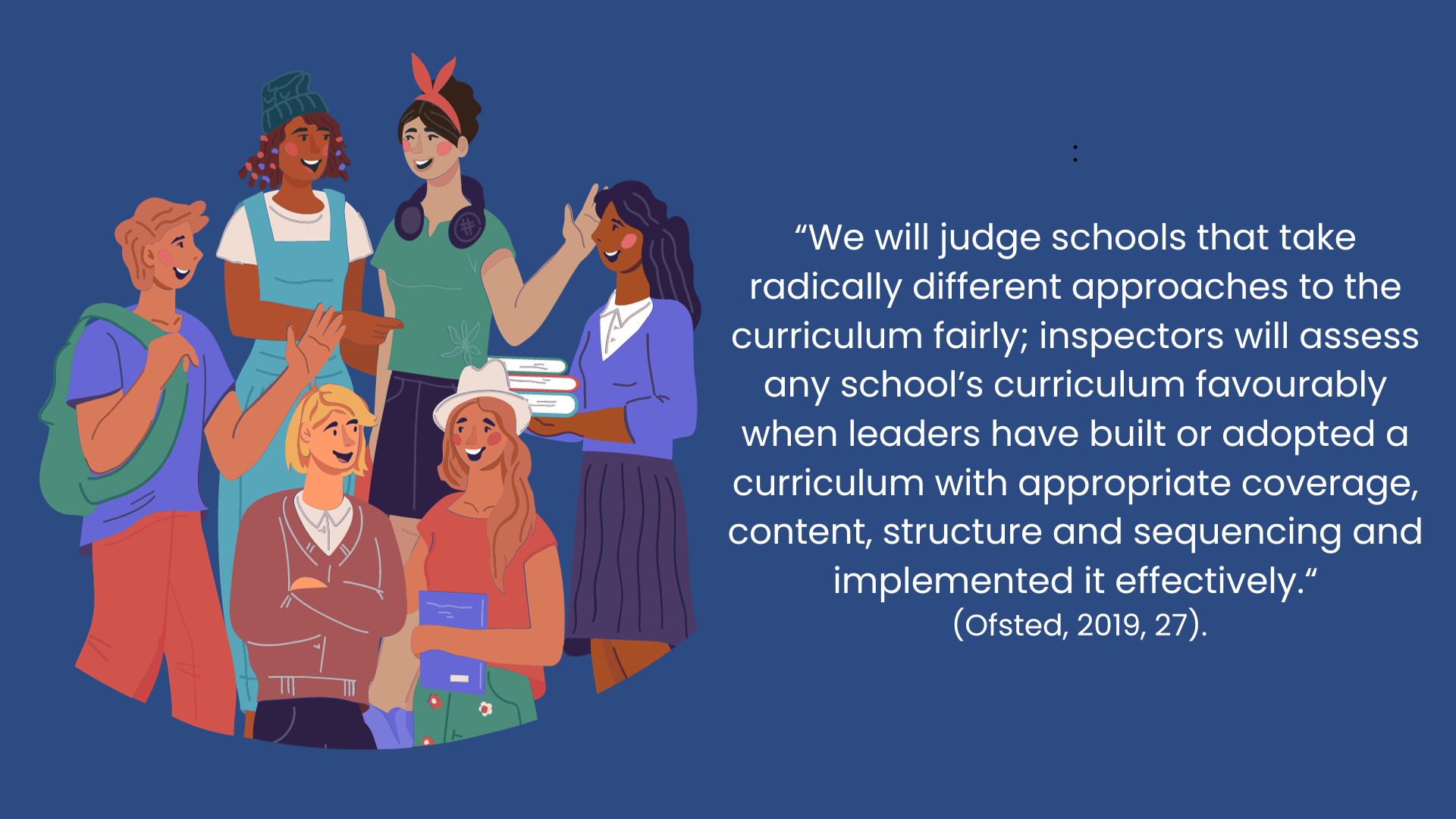
    We will judge schools that take radically different approaches to the curriculum fairly; inspectors will assess any school’s curriculum favourably when leaders have built or adopted a curriculum with appropriate coverage, content, structure and sequencing and implemented it effectively (27).

    I wanted to take this at face value, but I’d heard horror stories about schools whose inspection outcomes had been adversely affected by the personal preferences and assumptions of inspectors with no experience in alternative provisions or special schools.

    I was incredibly anxious that inspectors just wouldn’t “get” us or our students. This made my team and I focus all the more on refining a curriculum policy which would explain exactly why each subject was appropriate to the needs and aspirations of our students, and how each set of learning goals could be broken down over time in a way that allowed for a fair bit of “jumping” around. We wanted to demonstrate how ambitious we were for our learners whilst recognising that their individual journeys were never straightforward; progress would need to be measured and understood in the context of their own starting points.

    I was genuinely relieved to find that the inspectors recognised that, as a setting, we had put something meaningful together that was “well planned and sequenced” and moved students on from where they had been educationally “stuck”. The feedback was really positive and allowed us to feel a sense of confidence in what we were doing.

    Squaring the circle of a radically different curriculum

    I have reflected a lot since that inspection. I believe that it is possible to satisfy Ofsted while adopting a “radically different” approach but that it is a lot of hard work. In order to make it make sense, we had to use as our basis a very traditional model for sequencing a curriculum: year group based schemes of work for each “subject”. The radical bit came more from finding ways to use technology to track the various steps backwards and forwards across the curriculum so that it didn’t present like we were making it up as we went along.

    Learning to talk the inspectors’ language was also key. To do this we had to fully understand what else was out there in other settings and precisely why existing curricula wouldn’t work for us. We had to be able to provide justification for why we were doing things differently beyond the fact that our students really enjoyed it (despite knowing that, for us, this was the most important thing).  

    There were other parts of the inspection that were harder. At times it felt like one of the inspectors was unsettling the students and lacked a full understanding of the impact of his own presence and practice. Though Quality of Education was deemed to be good, there was also feedback about reading progress that made us feel like we were being penalised for working with students with very low levels of literacy. We were questioned fairly robustly about our approach to PE (breadth of experience over mastery of one or two sports) and were told it was “fine” but it still made it into our inspection report as a negative. All of this was a bit annoying given the huge strides we had made in these areas since our previous inspection.

    Conclusions

    What I want to conclude by saying is that school registration after being an AP is not for the faint hearted – it takes a lot of work and can be incredibly daunting when you are working in “radical” ways. It is, however, do-able. My experience is that Ofsted inspections are rigorous, exhausting, and sometimes difficult not to internalise but they are also possible to get through if you are an alternative provision wanting to register as a school. It is not always a fun experience, but it can be done.

    The trick is to really know your students and advocate very clearly and logically for exactly how your approach meets their educational and other needs. If you can focus on that, a lot of the rest of the curriculum will follow.

    Being the Adult in Behaviour Management

    Being the Adult in Behaviour Management

    Behaviour Management in Alternative Provision

    Children who struggle to cope in mainstream settings often present with behaviour which the adults find difficult to deal with. There are different schools of thought about how best schools should manage problematic student behaviour. England’s Behaviour Tsar, Tom Bennett advocates  ‘zero tolerance regimes’ where children are sent out of classrooms if they threaten the learning of others.  In common with, from what I can see is most professionals who post on LinkedIn, I favour a needs-based approach founded on authentic relationships of mutual respect,  when it comes to creating the best outcomes for children, and this applies, perhaps most acutely, for those for whom inclusion is a daily challenge.

    Regardless of the philosophical perspective on behaviour management one adopts, I suggest that key to an effective strategy is the commitment of the professional to the role of “the adult” in the relationships they have with the children they work with.

    For many of the children who find themselves in ‘Inclusion Units’, Alternative Provisions or Special Schools, the adult/child relationship is a complex proposition; they will all have had difficult interactions with staff at school, for some, relationships with adults in their communities and families are painful and unsafe.

    For this reason it’s important to establish what a positive adult/child relationship entails, and to model it in our work. Jane Bluestein, the American educator, breaks down what she calls the ‘win-win’ approach necessary for a positive adult/child relationship in the classroom (Bluestein J, The Win Win Classroom: A Fresh and Positive Look at Classroom Management, Thousand Oaks, 2008).

    Jane Bluestein on Behaviour Management

    For me, Bluestein’s model is as good a description of being the adult and professional in working with children as I’ve seen, and I’d like to suggest that we could all benefit from acquainting ourselves with it.

    Bluestein notes the importance  of 8 key factors:

    • Suppotiveness
    • Boundaries
    • Integrity
    • Eliminate double standards
    • Win-win
    • Proactivity
    • Success orientation
    • Self care

    According to Bluestein, it’s the responsibility of the adult to ensure that all these elements are present at all times in our relationships with our students. We need to be sure that whatever we say or do is driven by supportiveness for the child; that we set and hold boundaries and communicate them clearly; that we create situations where the child and the professional both feel they have the outcome they need from any interaction; that every aspect of the environment is geared towards the child achieving success; that we are proactive in anticipating any problems and mitigating them in advance; that we have the integrity to stand up for what we think is right, even when it’s difficult; that we don’t demonstrate double standards and that we look after our own wellbeing and resilience so that we can continue to be a positive adult in their school lives.

    Bluestein’s model asks a lot from the professional, and balancing all 8 elements of being the adult can be an extremely big ask for staff working at the sharp end of challenging behaviour. The best possible model for implementing this doesn’t just ask for more from individual staff; it puts the onus on leadership to find ways to ensure these 8 features can be embedded in the fabric of the school or community. Using these 8 as a starting point can help ensure that processes, policies and practice are aligned to create the best possible set of circumstances for staff to “be the adult”.

    Being the Adult in Practice

    An example from my own experience involved the concept of eliminating double standards. One of the hard and fast rules of the AP I worked at was that fizzy drinks were banned from school grounds. In order to give this policy the best chance of succeeding, staff were also banned from consuming fizzy drinks on site, a policy which (during my first week) I had failed to register in my cursory reading of the staff handbook. I thus strolled into the lunch area one day with a can of diet coke in my hand, only to be met with (playful) consternation from one of my senior colleagues. He publicly challenged me on my consumption of the offending item and made me pour the contents down the kitchen sink in full view of our students.

    It was done with a light touch and in good humour, but it underscored for me the importance of being able to challenge problem behaviour in adults in order to show that the same rules apply to all. Had I been allowed to consume the diet coke in view of students, it would have contributed to a culture where students felt a strong sense of injustice around the ways the rules were applied. While in mainstream settings it could be argued that understanding the complexities of how rules apply differently to children and adults is possible, it is certainly not a great idea to operate a set of double standards in the context of children whose relationships with adults in education has been fraught. Here was an example of how integrity and the elimination of double standards had been built into the culture of a school in such a way that staff felt comfortable to challenge a senior person (new as I was). In this way, I argue, it is possible to embed these 8 principles in practice across a provision to ensure the best possible chance of success and limit the extra “work” staff need to do to inhabit the role of adult.

    In her book Bluestein also gives detailed examples of what this might look like in practice; it’s an accessible and insightful read and I recommend it. I want to suggest that by really thinking through our responsibility as the adults in our professional relationships with children, our philosophical stance will develop in ways in which ensure that practice is effective and outcomes for children and young people are consistently positive.